Blog
How to Choose the Right Fire Extinguisher for Your Premises
The right extinguisher starts with the fire risk, not the building name
A flat, office, care premises or light industrial unit does not automatically need the same extinguisher arrangement as another property of the same type. The important question is what could burn, where it could burn and what people would need to do in the first moments of a fire.
When we assess premises in Batley, Leeds and surrounding areas, we look at the actual activities taking place rather than relying on a standard package. A quiet office with computers and kitchen facilities presents a different combination of risks from a workshop, communal residential building or care setting.
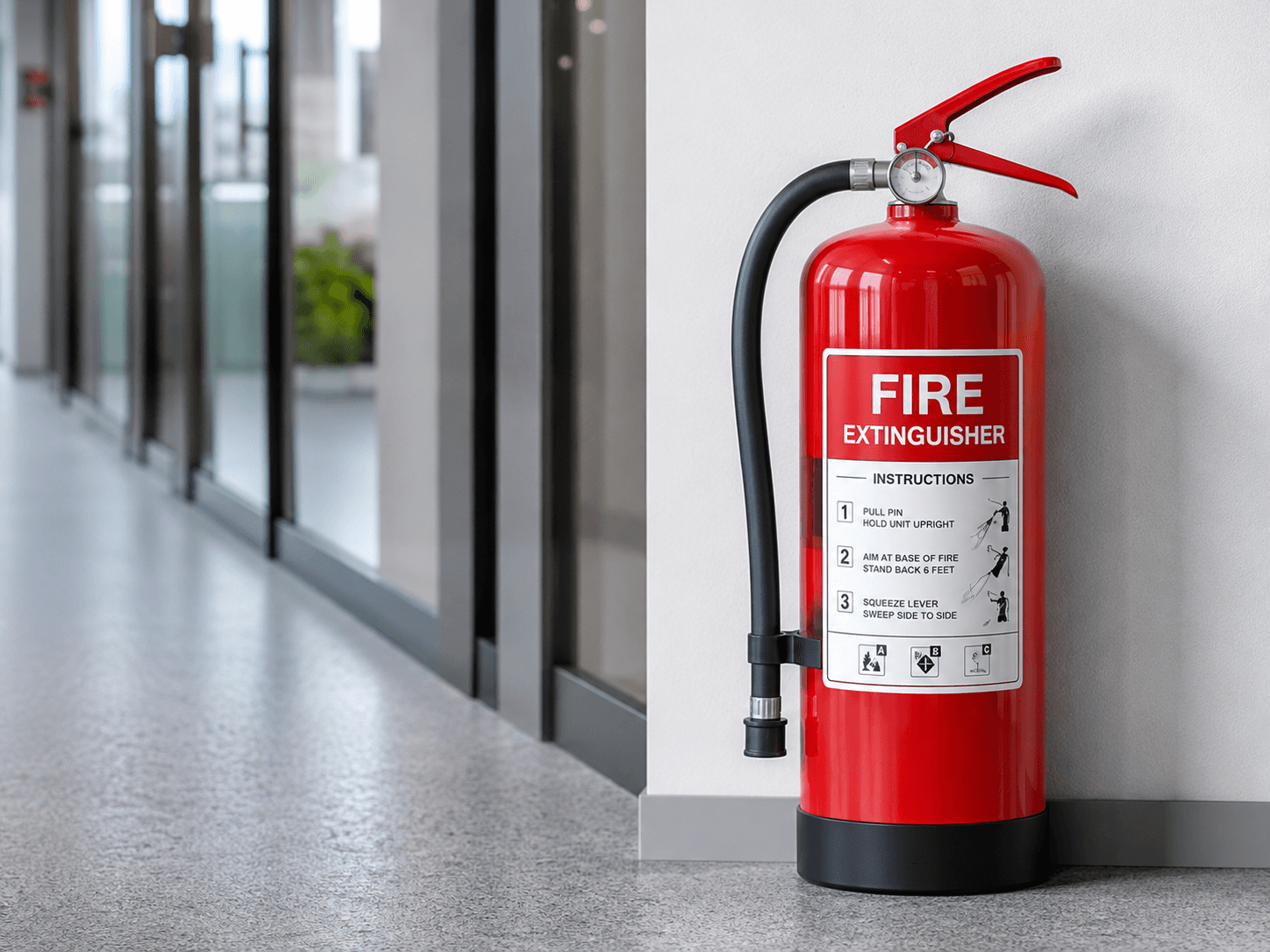
The Fire Extinguisher Installation and Maintenance service page gives the short answer on the main extinguisher types. The reasoning behind that choice is what matters when deciding what belongs on your walls.
1. Identify the material that could burn
Start by listing the fuels present in each area. This is more useful than counting rooms.
- Paper, cardboard, wood, textiles and similar solid materials point towards a water-based option, provided there are no additional hazards that make water unsuitable.
- Flammable liquids require different consideration. Petrol, solvents, oils, paints and some cleaning products can spread if the wrong extinguishing medium is used.
- Electrical equipment is common in almost every modern premises, but the electrical supply itself is not a fuel type. The decision depends on the equipment, whether it is likely to remain switched on and what damage the extinguishing medium could cause.
- Cooking areas need particular care because hot oils and fats behave differently from ordinary combustibles. A kitchen should not be treated as just another room containing a few appliances.
This is why choosing an extinguisher by appearance, capacity or popularity can create a false sense of protection. A unit may be easy to reach and fully charged, yet still be unsuitable for the fire it is expected to tackle.
2. Match the medium to the hazard
Water is effective against many ordinary solid combustibles because it cools the burning material. It is not a safe general answer for every risk, especially where live electrical equipment or flammable liquids are involved.
foam extinguishers can be considered where both solid materials and certain flammable liquid risks are present. They still need to be selected with care. The presence of an electrical appliance, a particular liquid or a specialist process can change whether foam is appropriate.
Carbon dioxide (CO2) extinguishers are commonly considered around electrical equipment because it does not leave the same type of residue as a powder or water-based extinguisher. However, it is not a universal replacement for other units. It does not provide the same cooling effect as water, so the risk of the fire developing again must be understood.
Dry powder can be useful for particular mixed or specialist risks, including some outdoor or industrial situations. Indoors, the powder can reduce visibility, contaminate equipment and make escape or clean-up more difficult. That makes it a poor default choice simply because it is described as versatile.
The choice balances how well the extinguisher tackles the fire, the damage it could cause, visibility and user safety, as well as how likely the risk is to occur.
3. Consider who will use the extinguisher
An extinguisher is only useful if people can recognise it, reach it without passing the fire and handle it safely. Staff, residents, visitors and care workers may have different levels of training, strength and confidence. A device that seems suitable to an engineer may not be a practical first response for the people actually present.
We also consider whether the unit would obstruct movement, be hidden behind furniture or be difficult to identify during an alarm. Siting should support a safe escape decision, not encourage someone to take an unnecessary risk. No extinguisher removes the need to evacuate when the fire is spreading, producing heavy smoke or blocking an escape route.
4. Check the whole layout, not just individual rooms
The number and position of extinguishers depend on how the premises is arranged and used. A unit in a locked room does not protect a corridor. An extinguisher at the far end of a building may be technically present but impractical to reach during an emergency.
We look at routes people use, stairways, exits, kitchens, areas containing building equipment, electrical cupboards, storage spaces and any areas where the use of the premises changes the risk. In a converted property, shared building or older premises, the layout can create awkward access points that a simple room-by-room approach misses.
Existing equipment also matters. Extinguishers may be incorrectly matched, poorly positioned, damaged or no longer suitable for how the building is now used. Adding another unit without reviewing the arrangement can leave the underlying problem untouched.
The decision should be recorded and reviewed
A proper selection process should leave you with more than equipment on a wall. You should understand which risk each unit addresses, where it is located and what checks or maintenance it needs. Keep the location information with your fire-safety records and make sure changes to the building, tenants, equipment or activities trigger a fresh review.
If you are unsure whether your current extinguishers match the risks in your premises, contact PPM Fire and Security Ltd on 07368353951 or email paul@ppmfire.com. We can assess the arrangement at your Batley, Leeds or wider West Yorkshire premises and advise on the appropriate installation and ongoing maintenance.
Other Articles