Blog
Signs you need fire extinguisher installation — and what to do next
Signs you need fire extinguisher installation — and what to do next
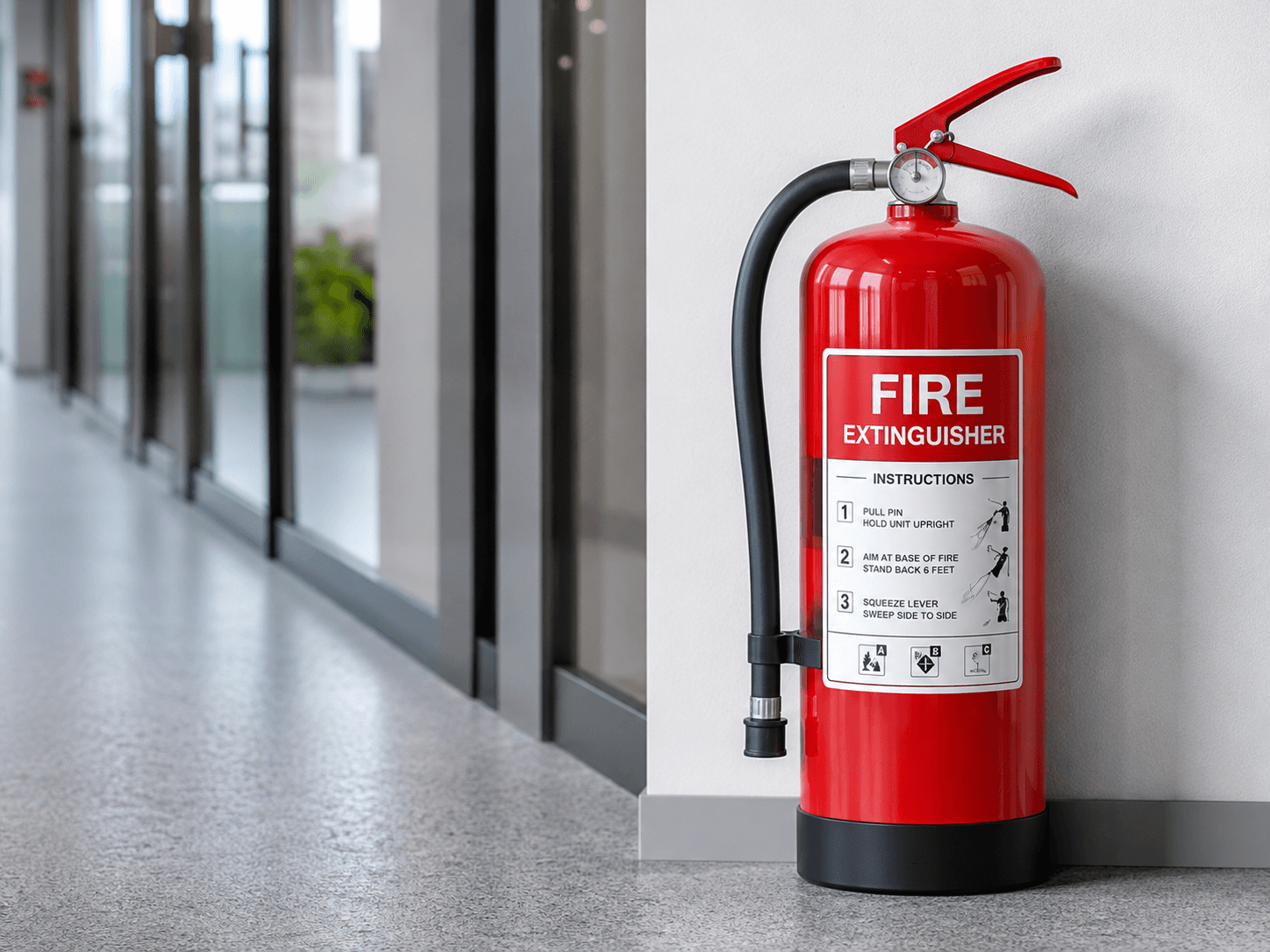
Fire extinguishers are a basic safety measure — but they must be the right type, in the right place and properly maintained. If you manage a commercial or mixed-use property in Leeds, Batley or Wakefield, spotting the warning signs early can stop a small incident becoming a major loss.
Red flags that you need extinguisher installation
- Visible absence or obvious gaps: No extinguishers in high-risk areas (kitchens, plant rooms, workshops, loading bays, electrical cupboards) or long distances between devices.
- Old, untagged equipment: Existing extinguishers without service tags or with worn, illegible records — you cannot rely on unverified units.
- Wrong extinguisher type for the risk: Powder used in a commercial kitchen, or water-only units where petrol or electrical fires are likely, means the extinguisher may be ineffective or dangerous.
- Recent layout or use changes: New equipment, a new tenant, processes that increase combustible materials or hot works alter your fire risk and often require additional extinguishers.
- Failed inspections or enforcement advice: If your fire risk assessment, insurer or the local fire authority has identified gaps, act promptly.
- Post-incident replacement: Any time an extinguisher has been used it must be replaced or professionally recharged and logged.
Why acting matters now
A correctly specified and positioned extinguisher can control small fires before they spread, protect escape routes and buy time for evacuation. Non-compliance with fire safety guidance can also increase liability and affect insurance cover. At PPM Fire and Security Ltd we follow British Standards for extinguisher selection and installation to protect people and property across Leeds and surrounding towns.
Practical first steps — what to do next
Do a simple walk-round
Note high-risk zones (kitchens, plant/boiler rooms, workshops), where staff work or visitors congregate, and how far anyone would have to travel to reach an extinguisher.
Check what you already have
Look for service tags, labels and visible damage. If units are corroded, missing pins or tags, or their types don’t match the risks, mark them as needing attention.
Review your fire risk assessment
If you don’t have a current assessment, arrange one. A competent assessor will identify required fire-fighting provisions and advise on extinguisher types and coverage.
Prioritise high-risk areas
Kitchens, fuel stores, chemical storage, electrical plant rooms and vehicle maintenance areas need the right extinguisher type and ready access. These are where installations should be prioritised.
Book a professional survey
Contact a qualified installer to carry out a site survey. The survey will recommend extinguisher types (foam, CO2, powder, wet chemical), quantities, mounting positions and signage compliant with British Standards (BS 5306 and related guidance).
What a proper installation includes
- Correct extinguisher type matched to the fire class.
- Secure, visible mounting and appropriate signage so devices are instantly locatable.
- Clear records: installation certificates, placement plans and handover information for duty holders.
- Guarantee on parts and installation and confirmation of insurance and competency.
Maintenance and handover — do not skip this
An installed extinguisher is only effective if maintained. After installation, a responsible person should carry out routine visual checks and keep a fire log. Arrange ongoing servicing with a competent engineer so the system remains compliant and reliable.
If you discover a fault or no extinguishers during a fire
If a fire is developing, raise the alarm and call the emergency services immediately. Only attempt to use an extinguisher if the fire is small, you are trained, you have a safe escape route and you are confident the extinguisher is appropriate.
For non-emergency issues — such as discovering missing or unsuitable extinguishers, or identifying a need after a risk assessment — book a professional survey and installation.
Why choose a specialist in Leeds
PPM Fire and Security Ltd has 15 years’ experience fitting and servicing fire-fighting equipment across Leeds and West Yorkshire. Work is carried out to British Standards, we provide guarantees on installations and parts, and our engineers are fully insured and competent. We also offer 24/7 emergency response and same-day attention for urgent faults.
If you’ve spotted any of the signs above, start with a site survey. Call us on 07368 353951 or email paul@ppmfire.com to arrange a survey at Unit 3 Cardinal House, Swinnow Grange Mills, Leeds LS13 4EP. We’ll assess risks, recommend extinguisher types and give a clear installation and maintenance plan — no jargon, just safe, compliant workmanship.
Other Articles